

Intermittent fasting. You’ve seen it everywhere—on Instagram reels, in health blogs, or even forwarded in family WhatsApp groups.
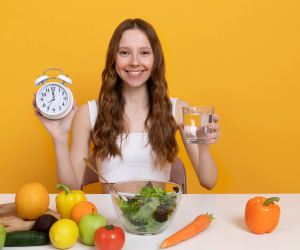
From weight loss promises to detox claims, it feels like everyone is skipping breakfast these days.
But if you’re a woman juggling work, hormones, and a to-do list that never ends, the big question is:
Is intermittent fasting actually good for women? Or could it mess up more than it fixes?
As a dietician working closely with women of all ages—teens, working moms, peri-menopausal queens—here’s my honest take:
Intermittent fasting can be helpful, but it’s not magic. And it’s definitely not a one-size-fits-all plan.
🧠 What Is Intermittent Fasting (IF), Really?
Let’s clear the air. IF isn’t about starving or skipping food forever. It’s about timing your meals in a structured way—giving your body regular breaks from digestion.
📅 Popular IF Patterns:
- 16:8 → Fast for 16 hours, eat in an 8-hour window
- 14:10 → A gentler, more hormone-friendly approach for women
- 5:2 → Eat normally for 5 days; restrict to 500–600 kcal for 2 days
- OMAD (One Meal A Day) → Not ideal for most women—it’s too restrictive
You’re not necessarily eating less—you’re just eating smartly within a timeframe.
🌈 The Real-Life Benefits of Intermittent Fasting (for Women)
Let’s be honest—when done right, intermittent fasting can feel amazing. Here’s what I’ve seen women experience in my clinic:
✅ 1. Bye-Bye Stubborn Belly Fat
Shorter eating windows can help reduce calorie intake and improve insulin sensitivity. That means fat loss—especially in the lower belly area.
✅ 2. No More Crazy Sugar Crashes
Struggling with PCOS, prediabetes, or mood swings? IF helps stabilize blood sugar, meaning fewer energy dips and fewer emotional rollercoasters.
✅ 3. Happy Gut, Less Bloat
Women who skip late-night snacking often report less gas, acidity, and bloating. Your gut loves downtime!
✅ 4. Clearer Mind
Less digestion = more brainpower. Women say they feel sharper and less foggy when they’re not grazing all day.
✅ 5. Gentle Hormone Support
Short fasts like 14:10 may support hunger hormones (ghrelin), insulin, and even estrogen levels. Some women notice smoother PMS and better energy—when done mindfully.
⚠️ The Not-So-Pretty Side of Intermittent Fasting
Now, here’s the real talk: intermittent fasting isn’t all sunshine and serotonin. Especially for women with sensitive hormones or high stress levels.
❌ 1. Hormones Can Get Messy
Fasting too long or too often can disrupt estrogen and progesterone. You may notice:
- Late or missed periods
- Mood swings or irritability
- Trouble conceiving (if trying)
Your body’s not punishing you. It’s protecting you.
❌ 2. You Might Feel Like a Zombie
Waking up foggy, irritable, or hangry isn’t a good sign. If you need 3 cups of tea just to survive till noon, IF might not be your match right now.
❌ 3. Evening Binges Are Common
Skipping meals can lead to overcompensating later. You fast all day and then snack endlessly post-dinner—bloating, guilt, and regret included.
❌ 4. Nutrition Can Suffer
Women are more prone to iron, calcium, and B12 deficiencies. IF can make it worse if you’re skipping nutrient-rich meals.
If you already have anemia, weak bones, or low energy—proceed carefully.
👩⚕️ Who Shouldn’t Try Intermittent Fasting?
Let’s get one thing straight—fasting isn’t a competition. You’re not “stronger” because you skipped breakfast.
Avoid IF (or only try under professional supervision) if you:
🚫 Are pregnant, breastfeeding, or trying to conceive
🚫 Have thyroid issues (especially hypothyroid)
🚫 Get irregular or missed periods
🚫 Have a history of eating disorders
🚫 Are underweight or struggle with low body fat
🚫 Feel dizzy, shaky, or mentally foggy without food
Your body is not a trend. Listen to it.
🌸 How to Try Fasting the Right Way (If You Want To)
If you’re curious and your body’s in a good place, here’s how to start gently without shocking your system.
💡 Start with a 12:12 or 14:10 Routine
Don’t jump into 16:8 on Day 1. Begin with a 12-hour fast (mostly overnight), and eat in a 12-hour window. Gradually shift to 14:10 if it feels good.
🥗 Focus on Nourishment, Not Just Timing
When you eat, eat well:
- Moong dal + sabzi + brown rice
- Besan chilla + salad + chutney
- Tofu bhurji + multigrain roti + veg soup
No skipping meals. No “chai + toast” lunch.
💧 Hydrate Like a Queen
Water, jeera water, tulsi tea—whatever suits your gut. But skip sugary drinks and heavy caffeine on an empty stomach.
🧘 Sync with Your Cycle
The week before or during your period? Give yourself grace. Fasting may not feel right on those days—and that’s okay.
🫶 Be Kind to Your Body
Fasting should feel empowering, not punishing. If you feel drained, moody, or obsessed with food—it’s time to step back.
📍 So… Should You Try It?
Ask yourself:
- Am I looking for long-term health or a quick fix?
- Can I manage slight hunger without overeating later?
- Is my current routine supportive of this habit?
If yes—start slow, observe, and adapt. If no—there are so many other ways to improve metabolism, balance hormones, and lose weight.
🗓️ Final Thoughts From a Dietician
Intermittent fasting can be a great tool—but only when it works with your body, not against it.
Some women feel amazing. Others feel anxious, moody, and exhausted. That doesn’t mean you failed. It means your body needs something different.
✨ Instead of following trends, follow your body’s feedback
✨ Instead of copying influencers, consult someone who knows you
💬 Thinking About Trying Fasting for PCOS, Bloating, or Weight Loss?
Let’s create a personalized, hormone-friendly plan that suits your lifestyle. Book a 1:1 consult at Mediccus Clinic – Vikaspuri and let’s see if intermittent fasting is right for you