

You know those conversations that happen in the quiet corners of a family gathering?
The ones where your cousin leans in, lowers her voice, and says, “Okay, but for real, does this ever happen to you?” That’s exactly the kind of space I want us to create right now—a space free from judgment, clinical jargon, and confusion. Just a warm, honest dialogue where we can talk about the things that perplex us about our bodies: our periods, PCOS, and all the myths swirling around them.
If you’ve ever mindlessly scrolled through Instagram reels showing hormonal acne or read vague posts about irregular cycles, and felt a knot of worry twist tighter in your chest, take a deep breath. You’re far from alone in this. If you’ve ever wondered whether your body is trying to tell you something, or if you’ve silently carried the fear that something must be wrong with you because of what your mother’s friend’s daughter went through—let’s pause together and untangle the mess. Consider this our late-night heart-to-heart, over a cup of chai, with no sugar-coating or rushed solutions.
Myth 1: “PCOS is a ‘weight problem.’ Only
women get it.”
Let me introduce you to my friend Anjali. She’s a yoga instructor who eats well, moves often, and embodies fitness. Her life looked picture-perfect on the outside, but behind the scenes, she battled persistent cystic acne along her jawline and periods that arrived whenever they pleased—or didn’t. Each time she sought advice, the same phrase echoed back: “But you’re so fit! You’re fine!” It took years for a doctor to diagnose her with lean PCOS, a form of PCOS where weight gain isn’t a symptom at all.
Here’s the truth: PCOS doesn’t care about your weight. It’s a complex hormonal disorder where your body struggles with insulin resistance, elevated androgens, and irregular ovulation—none of which are dependent on how many kilograms you carry. The myth that PCOS is only a problem for those who are overweight creates a dangerous silence. Many women internalize blame, thinking they must be doing something “wrong” because they don’t fit the stereotype.
Real talk: Listen to your body. Spotting hair thinning, mood swings that hit harder than usual, unexplained acne, or irregular periods? Those are signs worth paying attention to, regardless of your size. Don’t let anyone tell you your story isn’t valid.
Myth 2: “If your period comes on time, you’re in the clear.”
Oh, how I wish that were true. I used to mark my calendar religiously, thinking that a timely bleed was my body giving me a green light. But a regular period doesn’t guarantee ovulation, and it doesn’t mean your hormones are in balance. You can have a textbook 28-day cycle yet face elevated androgens, insulin resistance, or other imbalances that go unnoticed without proper testing.
Think of your period like the headline in a newspaper. It tells you something, yes, but it’s not the full story. Beneath the surface, your hormones could be quietly out of sync, influencing mood swings, skin troubles, or unexplained fatigue.
Myth 3: “Irregular periods are just your normal. Stop worrying.”
Often this comes from older relatives who were told to endure in silence: “Hamaré zamané mein toh koi check-up hi nahi karta tha!” Their resilience is admirable, but it doesn’t mean we should carry the same burden. Chronic skipped periods, prolonged heavy bleeding, or cycles shorter than 21 days are not just “your normal.”
These are your body’s red flags. Ignoring them means ignoring your health. Underneath might lie PCOS, thyroid dysfunction, or stress overload—all needing compassionate attention, not dismissal.
Myth 4: “The name says ‘cysts,’ so you must have painful cysts.”
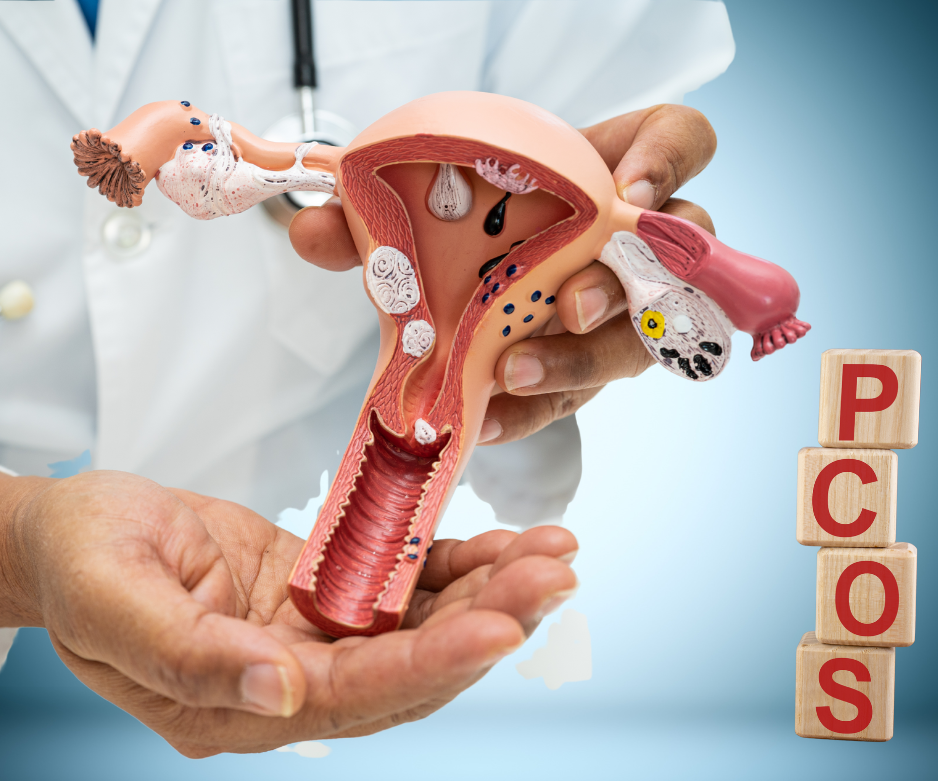
Let’s clear up the terrifying misunderstanding. The word “Polycystic” makes it sound like there are painful, swollen cysts threatening to burst. The reality? Most of the time, these “cysts” are actually immature follicles that decided to linger on your ovaries like overstaying guests. They usually cause no pain at all.
Moreover, having a bunch of follicles doesn’t automatically mean you have PCOS. Likewise, you can have PCOS with a completely normal-looking ultrasound. The scan is just one piece of the puzzle, not the whole picture.
Myth 5: “Getting a PCOS diagnosis is quick and easy.”
Far from it. The journey to a diagnosis is often long, frustrating, and full of uncertainty—especially for teenagers whose bodies are already in hormonal flux. A caring doctor doesn’t just give you a label after one irregular cycle. Instead, they look at your full cycle history, symptoms, blood tests, and lifestyle over time.
You have every right to ask questions like, “Could there be another explanation?” and “What does this mean for me long term?” You are not a patient number; you’re the most qualified expert on how you feel.
Myth 6: “The only treatment is birth control pills.”
Let’s be honest, this one drives me crazy. Birth control pills can help regulate your cycle or improve skin for some, but they are not the magic wand. They mask symptoms without addressing root causes like insulin resistance or hormone imbalance.
Managing PCOS is deeply personal. For some, it means adopting a nourishing, joyful way of eating—no extreme restrictions, just real, balanced food that makes you feel good. For others, it’s about inositol supplements, metformin, or gentle, consistent movement. Stress management plays a huge role, too—whether it’s a relaxing yoga flow, a walk with your dog, or meditation in your room. Your treatment plan is yours to create, in partnership with a trusted doctor.
Myth 7: “PCOS means you can’t get pregnant.”
Let’s retire this myth, right now. It has caused so much needless heartache. Yes, PCOS may complicate ovulation, but it doesn’t mean infertility. Thousands of women conceive naturally every day. Others need a little extra help—whether through lifestyle changes, ovulation-stimulating medications, or assisted reproduction techniques like IVF.
Your dream of motherhood is still alive. It might follow a different path, but it is absolutely within reach.
Myth 8: “You brought this on yourself with a bad diet or lifestyle.”
Let me be clear: PCOS is genetic and hormonal, not a punishment for “bad” choices. No amount of self-blame changes that. That said, lifestyle habits can help manage symptoms. The key difference is that managing PCOS is about caring for your body, not punishing it.
So skip the guilt trip. You’re not responsible for having PCOS, but you are empowered to learn what makes you feel strong, balanced, and joyful.
Myth 9: “
and your PCOS will vanish.”
Ah, the “quick fix” illusion. While reaching a healthier weight may ease symptoms—improving cycles, reducing insulin resistance—it is not a cure. PCOS is a lifelong companion you can manage, but it doesn’t disappear with a number on the scale.
The real goal? Feeling good in your own skin. Paying attention to your energy levels, strength, mood, and vitality—not chasing an arbitrary size.
Myth 10: “Diabetes is your destiny with PCOS.”
Let’s pause. The word “diabetes” often arrives as a scary shadow when PCOS is mentioned. Yes, insulin resistance can be part of the picture, but that’s not a sentence; it’s a hint—a signal to act wisely.
It’s about choice. About finding movement that lights you up—a dance class, morning walks, or stretching at home. About seeing food as fuel, not the enemy. Maybe it’s about adding more colorful veggies or balancing your plate with proteins.
It’s about partnering with a doctor who listens and having simple blood tests done regularly. Knowledge replaces fear. You are not a passenger; you’re in the driver’s seat, confidently steering your journey.
Because Periods & PCOS Are Inseparable, Let’s Bust Period Myths Too
❌ “You can’t get pregnant on your period.”
👉 Truth: Sperm are resilient little swimmers that can survive up to five days inside the body. If your cycle is short and you ovulate soon after your period ends, pregnancy is absolutely possible. Relying on this myth is risky.
❌ “A 28-day cycle is the only normal cycle.”
👉 Truth: Who decided 28 was the magic number? Your cycle is as unique as your fingerprint. Whether it’s 21, 30, or 35 days—what matters most is consistency for you.
❌ “Period blood is dirty blood.”
👉 Truth: Let’s toss this shameful myth out the window. Period blood is not dirty or impure—it’s your body’s way of shedding tissue and blood you no longer need. It’s a healthy, natural process that shows your body is working as it should.
Why Does This All Feel So Complicated?
For generations, information about female health was hidden, whispered, or simply ignored. We were taught to be quiet about pads, hush about mood swings, and grin through cramps.
But that era is ending. We’re the generation demanding answers. We’re asking doctors the right questions, having open conversations over coffee, and refusing to let silence hold us back. Every time you speak up, you make it easier for the next woman.
The Most Important Thing To Remember
You are the expert on you.
Nobody lives in your body but you. That gut feeling you get when something is off? That’s your power. Trust it.
Your worth is not tied to your fertility, your weight, or your cycle’s regularity. PCOS is something you manage; it does not define you.
You are resilient. You are strong. You are capable of learning and navigating this.
And you are never alone.
🌸 With so much love and solidarity,
Your Friend
Need Support?
At Mediccus Clinic, Vikaspuri, we specialize in holistic, compassionate care for PCOS, hormonal imbalances, digestive health, and chronic pain management through personalized diet plans, acupuncture, and supportive counseling.
📍 Visit us: Mediccus Clinic, Vikaspuri, New Delhi
📞 Call us: +91 9810994742
🌐 Website: www.mediccusclinic.com
📧 Email: contact@mediccusclinic.com
Let’s walk this journey together, one honest, empowering conversation at a time.